Traveling to El Salvador? Pre-order your custom JEDA and get priority production + traveler pricing.


The Story Behind JEDA Surfboards: A Lifetime of Surfing and Shaping

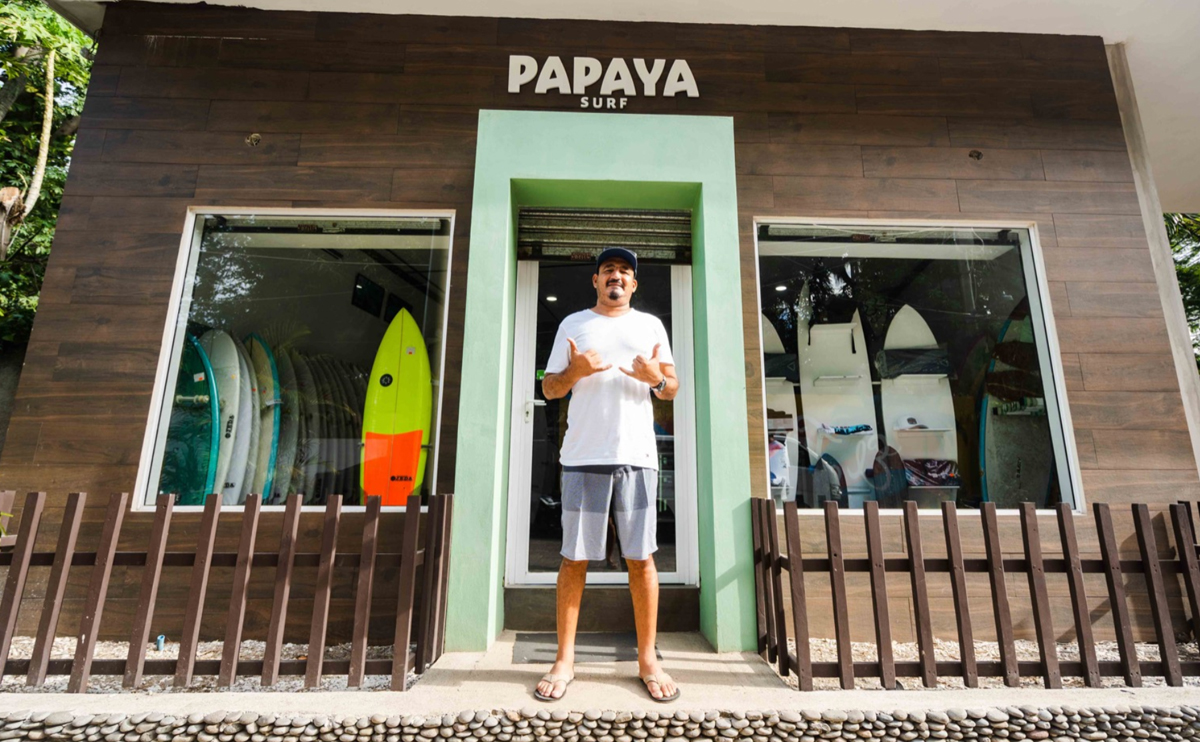
JEDA Surfboards is more than a surfboard brand. Its story is closely connected to the history of surfing in El Salvador and to the life of surfer and shaper Jaime “Papaya” Delgado.
Long before digital surfboard design, CNC shaping and easy access to imported equipment, Papaya was already experimenting with boards and learning the craft through necessity, curiosity and a deep connection to surfing.
It Started With the Need to Surf
Papaya began shaping surfboards at just 16 years old.
At the time, surfboards were difficult to obtain in El Salvador. Surfers often had to make the most of whatever equipment was available. Large or damaged boards could be stripped down, reshaped and laminated again simply to create something they could surf.
For Papaya, that necessity quickly became a passion.
Without today’s digital tools and design software, much of the inspiration came from studying surf magazines, observing boards and remembering the details that caught his attention. He would then interpret those ideas through his own experience and develop them in his own way.
What began as experimentation eventually became decades of shaping, repairing and manufacturing surfboards.
Experience Beyond El Salvador
As more surfers began trusting his work, Papaya’s experience expanded beyond his local shaping room.
He spent time building boards in Guatemala and also worked in China, gaining experience in different manufacturing environments while continuing to shape, repair and develop surfboards in El Salvador.
Through years of surfing, traveling and building boards, he developed an understanding of surfboard design that remained strongly connected to the waves and conditions he knew at home.
Boards Designed for Salvadoran Waves
One of the foundations behind JEDA is simple: different waves require different boards.
El Salvador is home to powerful point breaks, fast performance waves and a wide range of conditions. Papaya’s approach has always been to develop boards around the waves they are intended to surf rather than applying the same design formula everywhere.
El Sunzal With its large volume of moving water and long walls, El Sunzal can benefit from boards with additional volume, paddle power and flow.
La Bocana Faster and more vertical, La Bocana calls for a more performance-oriented board with speed, responsiveness and control through powerful turns.
The same thinking applies throughout the JEDA range. Volume, rocker, rails, outline, bottom contours, tail design and fin setup all work together to give each board a specific purpose in the water.
From Papaya to JEDA
The name JEDA comes directly from Papaya’s full name: Jaime Ernesto Delgado Aguilar.
While the Papaya name became closely connected to Jaime and his history in Salvadoran surfing, JEDA became the identity for the surfboards themselves — representing decades of shaping experience, local knowledge and continued development.
Today, JEDA brings that experience together with modern surfboard design, precision shaping and hands-on craftsmanship.
JEDA Today
The tools have changed dramatically since Papaya first began shaping boards, but the philosophy behind the work remains the same.
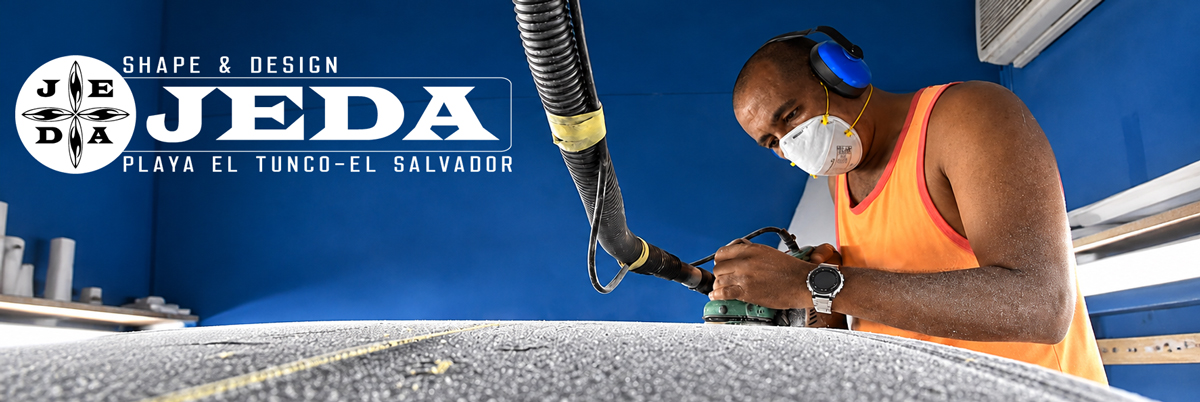
Today, JEDA combines digital surfboard design and CNC precision shaping with hand finishing, glassing, sanding and quality control. Technology allows us to refine and reproduce designs with greater accuracy, while experience and craftsmanship remain essential throughout the process.
Every board still begins with understanding the surfer, the waves and what the board is intended to do. That connection between local knowledge, modern precision and hands-on craftsmanship continues to define JEDA Surfboards today.
Read the original interview at DUKE Surf →
